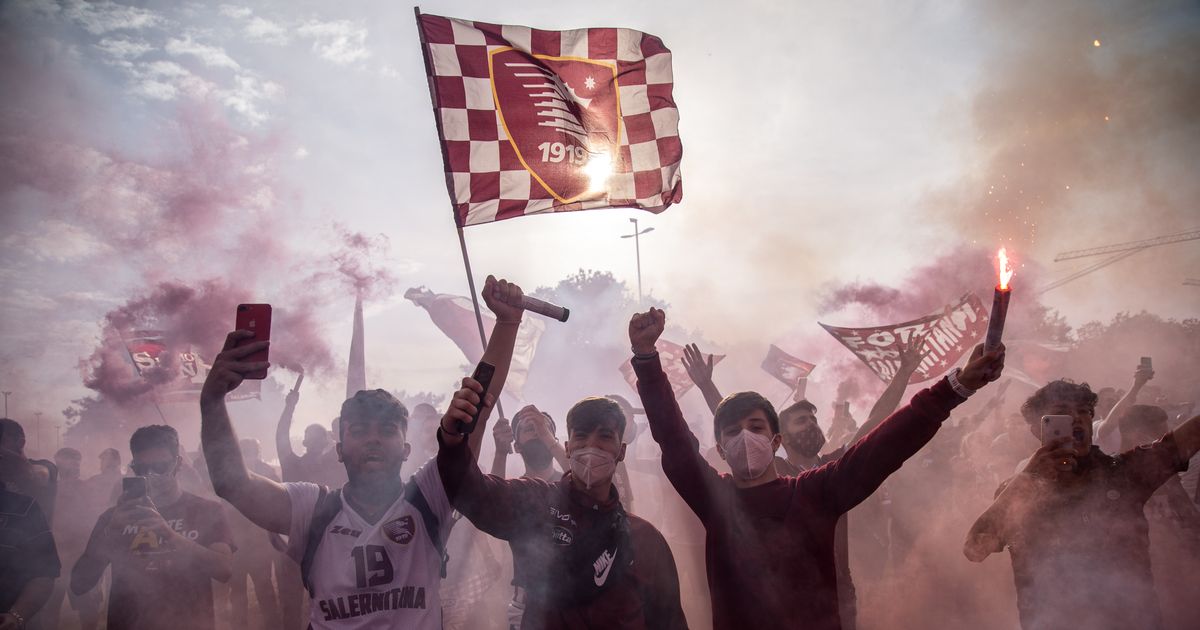
The world of Italian football is a tapestry woven with intense passion, deep-rooted rivalries, and an unwavering loyalty that often transcends the boundaries of the pitch. Few clubs embody this turbulent spirit quite like Salernitana, a team whose recent journey back to Serie A has been fraught with challenges both on and off the field. From violent clashes involving their fervent ultras Salernitana to an existential crisis threatening their very place in Italy's top flight, the Granata's story is a compelling saga of resilience, controversy, and the enduring power of fan devotion.
Their promotion to Serie A, a dream realized, quickly spiraled into a nightmare of ownership disputes and a precarious league position. Adding to this volatility are the actions of a segment of their support, the ultras, whose passion, while a driving force, has also led to confrontations that cast a shadow over the club. This article delves into the heart of Salernitana's current predicament, exploring the intricate dynamics of their fan culture and the battle for their Serie A survival.
The Fiery Heart of the Curva: Understanding Ultras Salernitana Clashes
The passion of Italian football fans is legendary, and the ultras Salernitana are no exception. Their devotion is palpable, creating an electrifying atmosphere at the Stadio Arechi. However, this fervor can sometimes spill over, leading to confrontations that grab headlines for all the wrong reasons. A stark reminder of this came just before a recent Serie A clash against Fiorentina.
A planned attack on visiting Fiorentina supporters outside the stadium was thwarted by police, resulting in violent clashes that left ten officers injured, three requiring hospital treatment. For a harrowing 20 minutes, objects including fireworks and explosives were hurled, forcing police to deploy tear gas, sending families and regular match-goers scrambling into the stadium for safety. This incident highlights the dark side of ultra culture, where intense loyalty to one's club can morph into aggression towards rivals and, ultimately, law enforcement. For a more detailed look into this specific incident, read our article: Salernitana Ultras Violence: Unpacking Fiorentina Clashes.
A History of Hostility
The rivalry between Salernitana and Fiorentina fans isn't new; it's deeply etched in history, tracing its roots back to November 1998. That year, Fiorentina played a UEFA Cup match against Grasshoppers on neutral turf at the Stadio Arechi. Local Salernitana fans, perhaps seeing an opportunity to express their frustration or simply fueled by a general anti-Florentine sentiment, threw fireworks onto the pitch, striking the assistant referee. UEFA's response was decisive, inflicting a defeat on Fiorentina as the 'home' team. This ignominious event laid the foundation for decades of animosity, manifesting in numerous clashes over the years.
More recently, during a minute's silence for Mattia Giani, a young player who tragically died in a semi-pro match near Florence, some Salernitana supporters regrettably shouted insults. Such actions underscore the deep-seated nature of these rivalries and the challenges clubs and authorities face in promoting respect and sportsmanship, even in moments of solemn remembrance. The complex role of ultras in Italian football continues to be a topic of debate, balancing their vibrant contributions to match atmosphere against the occasional outbursts of violence and disrespect.
A Club on the Brink: The Serie A Ownership Saga
Beyond the pitch-side controversies, Salernitana has been battling a more existential threat: their very right to remain in Serie A. This crisis stems from the complicated ownership situation involving Claudio Lotito, the prominent figure who also owns Lazio. Italian Football Federation (FIGC) regulations strictly prohibit one individual from controlling two clubs in the same division, a rule Lotito knew he would have to address following Salernitana's promotion from Serie B.
Despite numerous deadlines and extensions, the search for a new buyer for Salernitana proved arduous. The looming threat was severe: if a sale wasn't finalized by December 31st, the FIGC could exclude Salernitana from Serie A, forcing them to restart from amateur leagues and wiping all their results from the current campaign. This scenario would be devastating, not just for the club but for the entire city of Salerno and its devoted fanbase.
"Liberate Salernitana!" The Fans' Cry
Unsurprisingly, this chaotic situation ignited a fervent wave of protests from the ultras Salernitana and the wider fan base. Banners appeared across the Stadio Arechi, expressing profound anger and frustration. The rallying cry became "Liberate Salernitana!", a direct plea to free their club from the ownership limbo. Messages like "Gravina, keep your promise" targeted FIGC President Gabriele Gravina, urging him to safeguard the club's future. Another powerful banner declared: "Amateur, semi-pro or neighbourhood field, we’re with Salernitana whatever the level," illustrating the unwavering loyalty that runs deep within the community, regardless of the club's standing.
The protests weren't confined to Salerno alone. In a remarkable show of solidarity, Inter Milan ultras also displayed a banner, which received a standing ovation from the local crowd: "You cannot buy and sell your faith at a marketplace. Solidarity with Salernitana fans." This act underscored the universal principle within ultra culture that a club's identity and its fans' devotion should never be treated as mere commodities. For a deeper dive into this ownership crisis and the fan movement, see our dedicated article: Salernitana Serie A Crisis: The Battle to Liberate the Club.
Salernitana's Turbulent History and Uncertain Future
The current turmoil is not Salernitana's first dance with adversity. Founded in 1919, the club has a rich, albeit often turbulent, history. Their previous stints in Serie A were brief, in 1947-48 and 1998-99. The intervening decades saw multiple bankruptcies, including in 2005 and 2011, which led to name changes and forced restarts from lower leagues. It was after the 2011 crisis that Lotito's brother-in-law took over, eventually leading to the promotion that triggered the current ownership conundrum. This cyclical pattern of rising, falling, and fighting for survival has ingrained a deep sense of resilience and defiance within the club's DNA and its supporters.
Currently, Salernitana finds itself dead last in the Serie A table, with only eight points after 15 rounds. While their logo featuring a stylized seahorse (the slowest swimmers) is an amusing coincidence, the grim reality is that the constant off-field chaos undoubtedly impacts player morale and on-field performance. The psychological toll of uncertainty, the pressure of protests, and the ever-present threat of expulsion make it incredibly difficult for players and management to focus solely on football. Despite these challenges, the loyalty of the ultras Salernitana remains steadfast, offering a beacon of hope even in the darkest hours.
Navigating the Storm: Actionable Insights for Clubs and Fans
The Salernitana saga offers valuable lessons for all stakeholders in football, from governing bodies to the most passionate fan groups.
- For Clubs and Owners: Transparency and proactive communication are paramount. Ownership structures must be clear and compliant with regulations to prevent such existential crises. Genuine fan engagement, distinguishing between legitimate concerns and aggressive actions, can foster a healthier relationship between the club and its support base.
- For Football Authorities (FIGC, Lega Serie A): While rules are essential, their enforcement must be clear, timely, and consistent. Proactive measures to identify potential conflicts of interest and streamline ownership transfers can safeguard club integrity and prevent situations where clubs are held hostage by administrative delays.
- For Fans and Supporters: The passion of supporters is the lifeblood of football. However, channeling this energy positively is crucial. Organized, peaceful protests, like the "Liberate Salernitana" campaign, demonstrate powerful solidarity. It’s also important to distinguish between passionate support and actions that endanger safety or disrespect solemn occasions, ensuring the integrity and reputation of the wider fan movement.
The unwavering commitment of the Salernitana faithful, including the ultras Salernitana, serves as a powerful reminder that beyond the business and the controversies, football remains deeply rooted in community and identity. Their fight is not just for a Serie A spot, but for the soul of their club.
Conclusion
Salernitana's tumultuous journey in Serie A is a microcosm of the intense highs and dramatic lows that define Italian football. From the fiery passion of their ultras, sometimes spilling into conflict, to the club's desperate fight for survival amidst ownership chaos, their story is one of a community united against adversity. While the challenges are immense – a precarious league position, a fractured history, and the constant threat of administrative upheaval – the enduring spirit of the ultras Salernitana and their fellow supporters continues to burn brightly. Their future in Serie A remains uncertain, but one thing is clear: the Granata faithful will stand by their club, whatever the level, embodying the profound loyalty that defines the beautiful, yet often brutal, game.